How the December 5th Cloudflare Outage Shut Down 5,000 Shopify Stores
On December 5th, 2025, at approximately 08:47 UTC, Cloudflare experienced a significant outage that took down 28% of all HTTP traffic globally. For about 25 minutes, major platforms including X, LinkedIn, Spotify, and thousands of Shopify stores became completely unreachable.
At RealtimeStack, we captured the exact moment this happened, and the data tells a striking story.
What Our Data Shows
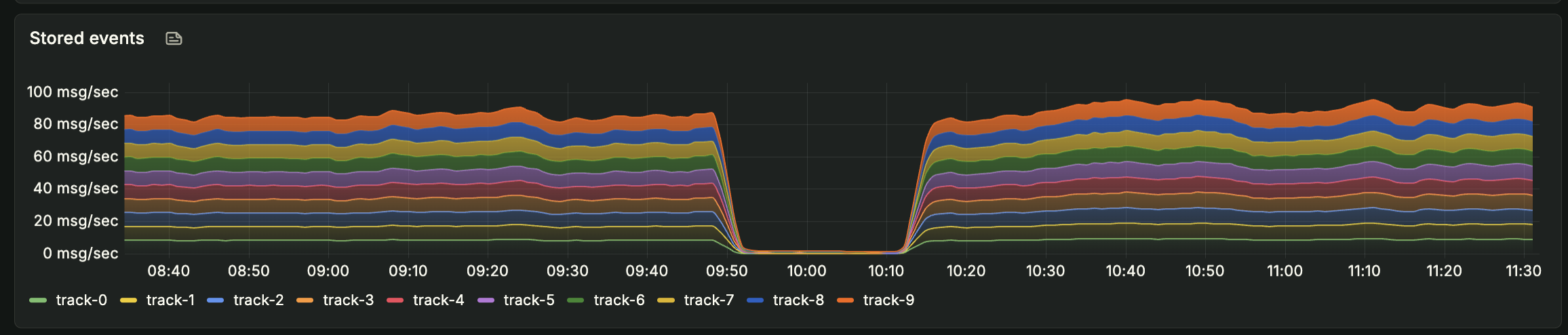
The graph above displays real-time event data from approximately 5,000 Shopify stores monitored by RealtimeStack. Each colored band represents a different tracking stream (track-0 through track-9), showing visitor activity measured in messages per second.
At 09:50 CET (08:50 UTC), traffic across all stores dropped to near zero simultaneously. The recovery began around 10:10 CET, with traffic gradually returning to normal levels over the following minutes.
What’s notable here is the complete and simultaneous shutdown across all monitored stores. This wasn’t a gradual degradation. It was an instant, total blackout affecting every Shopify merchant at the same moment.
What Happened at Cloudflare
According to Cloudflare’s official post-mortem, the outage was caused by a Web Application Firewall (WAF) update. Here’s the chain of events:
-
The Trigger: Cloudflare was rolling out a WAF configuration change to help mitigate an industry-wide vulnerability in React Server Components that had been disclosed that week.
-
The Buffer Size Change: As part of this mitigation, they were increasing their buffer size to 1MB to protect customers. This was being deployed using their gradual rollout system.
-
The Fatal Mistake: During the rollout, engineers noticed their internal WAF testing tool didn’t support the increased buffer size. To work around this, they made a second change to disable the testing tool.
-
The Global Push: This second change was implemented using Cloudflare’s global configuration system, which does not perform gradual rollouts. Instead, it propagates changes within seconds to their entire fleet of servers worldwide.
The result: a configuration that should have been gradually tested was instantly deployed everywhere, causing widespread failures.
Why Shopify Stores Were Affected
Shopify, like many large platforms, uses Cloudflare for CDN and security services. When Cloudflare’s edge network failed, requests to Shopify storefronts couldn’t be processed, effectively taking all stores offline.
Importantly, RealtimeStack itself was not affected by this outage. Our infrastructure doesn’t rely on Cloudflare, which is why we were able to continue monitoring and capturing this data in real-time. The drop you see in the graph isn’t RealtimeStack going down. It’s us watching as every Shopify store went dark simultaneously.
What This Means for Merchants
This incident highlights several important realities for e-commerce merchants:
1. Infrastructure Dependencies Are Often Invisible
Most merchants don’t know (or need to know) that their store relies on Cloudflare. These dependencies only become visible when they fail. Understanding your platform’s infrastructure stack helps you set realistic expectations during outages.
2. Outages Are Usually Not Your Fault
When your store goes down, the instinct is often to check your own configurations, themes, and apps. In cases like this, there’s literally nothing you could have done because the problem was several layers removed from your store.
3. Real-Time Monitoring Provides Clarity
During the outage, merchants using RealtimeStack could see exactly when traffic stopped and when it recovered. This clarity is valuable because it confirms the issue isn’t on your end and helps you communicate accurately with customers and team members.
4. Cascading Failures Affect Everyone Equally
Notice how all stores dropped at the same moment and recovered together. When infrastructure at this level fails, there’s no competitive advantage. Everyone is equally affected.
Key Takeaways
- Duration: Approximately 25 minutes (08:47 - 09:12 UTC)
- Cause: WAF configuration change pushed globally without gradual rollout
- Impact: 28% of global HTTP traffic, including all Shopify stores
- Not an attack: Cloudflare confirmed this was not caused by any cyber attack or malicious activity
This was Cloudflare’s second major outage in three weeks, following a three-hour incident in November. As one cybersecurity expert noted, “This is one of the things that we are going to see more and more” as organizations increasingly rely on centralized infrastructure providers.
For merchants, the lesson is clear: understand that your store’s availability depends on more than just your own systems, and invest in monitoring that gives you visibility when things go wrong.
Sources: Cloudflare Blog, ThousandEyes Analysis